Peace Watch » Editor's Take » Tinderbox That Is India and Pakistan Relations
Tinderbox That Is India and Pakistan Relations
Z. G. Muhammad
Nawaz Sharif, for past three months has been holding an olive branch high in sky. Bubbling with enthusiasm, at best of his eloquence, he has been talking about improving ties with New Delhi. In mid May, immediately after overwhelming success in 2013 elections, the Muslim League leader, much before the Election Commission of Pakistan notified the results, announced visiting India ‘whether New Delhi invited him or not’. Seen as undiplomatic and apolitical, this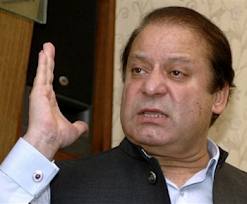 statement from the future prime minister of Pakistan had embarrassed Pakistan Foreign office. It had caused some critical writings in newspapers- these did not dampen his eagerness for inviting Indian Prime Minister for the oath taking ceremony and talking peace with India. Notwithstanding his reluctance to visit Pakistan, Manmohan Singh reciprocated Sharif’s enthusiasm with a terse message, “I look forward to working with you and your government to chart a new course and pursue a new destiny in the relations between our countries.” The message brightened the hope that two countries would embark upon a new ‘symbiotic path’ that would help in removing sixty-five year old trust deficit between the two countries and pave way for resolving the dispute and ensuring much needed peace in the region.
Since his assumption of office, the new Pakistan Prime Minister has been enthusiastically trying to warm up relations with New Delhi. In fact, so far his foreign policy has been nothing but India centric. In first week of June, in a message to all heads of Pakistani missions he announced foreign policy roadmap of his country. India topped his priority. Stressing the ‘need for progressively pursuing normalcy in bilateral relations’ he also sought actively seeking solutions for all outstanding issues, including Jammu and Kashmir.’ After June, Prime Minister, Nawaz Sharif made many statements about improving relations with New Delhi indicative of reprioritizing his foreign policy more particularly with regard to India. Instead of making relations with India subordinate to the ‘security concerns’ of his country as has been during over past sixty years and keeping Kashmir at the centre stage, his statement during past two months have been sufficiently suggestive that he wants to make trade between the two countries as the first priority.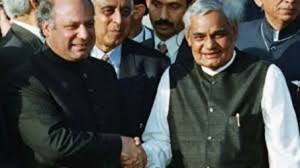
It is an important question why ‘security concerns’, despite founding Quaid-e-Azam wanting ‘Pakistan’s foreign policy to be moulded in the crucible of interaction with its neighbor India had an overriding effect on relation between two neighbors. Dr. Maleeha Lodhi looking for an answer for this question writes, “Pakistan’s fears were reinforced by Delhi’s conduct in the country’s formative years. Whether it was the transfer of assets inherited from British India, the coercive absorption of several princely states into Indian union, including Kashmir or the sharing of river waters, Pakistan saw India seeking to impose its will in disregard of agreements that governed partition”. (Pakistan Beyond Crisis State).
Seen in introspect, it has been the ‘security concerns’ that have pushed Pakistan into the web of cold war and made it assume ‘frontline’ role to help the West to ‘pursue its objectives on the basis of strategic premise that this would help to mitigate its chronic sense of insecurity’. It in fact have been these concerns only that have to quote Shuja Nawaz, “thrust the Pakistan military into centre stage of decision making on issues related to its foreign policy, especially policy towards India (Kashmir specially).
Nawaz Sharif has taken a big task unto himself by seeing trade with India as a way forward for improving relations with the neighboring country and seeing trade as an instrument of peace and a means for addressing security concerns of his country. It is a big question if trade relations can help in addressing the ‘security concerns’ of his country.
When he talks about ‘picking thread’ with India where it had been left in 1999 after the Lahore Declaration he forgets to realize that the policy had not found many takers in the country and had facilitated third military coup in the country. Despite Lahore document being comprehensive and covering whole gamut of issue an influential section of opinion makers in Pakistan had criticized it and had called the summit as ‘grand ephemeral success’. “The emphasis on bilateral negotiations and the failure to mention even the United Nations principle of governing bilateral relations as had been in the Shimla Agreement’ earned him no kudos. Former Pakistan foreign minister, Abdu Sattar believes that it ‘provided convenient alibi to world opinion especially influential powers, to abdicate responsibility to promote a just settlement of Kashmir question.’ Highly caustic about the reference to the ‘sanctity’ of the LOC in the Lahore document, Sattar says that ‘it invested this temporary line with a characteristic that applies to international boundaries.’ Talking about picking thread where they were left in 1999 have not found any takers amongst Pakistan opinion makers and denouncing it as ‘freeze frame’ they have been stating that since 1999, international political scenario has undergone a sea change- and more particularly there are more important changes in offing after US withdrawal from Afghanistan.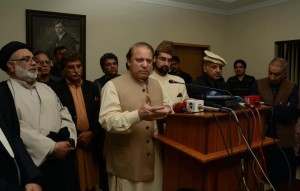
Nawaz Sharif fervor for taking trade with New Delhi to new heights is in line with the policies of the PPP government- that even granted MFN status to India but the question is that can increased trade activity help in bring peace in the region- perhaps not. Time and again it has been proved that India and Pakistan relations are a tinderbox just a matchsticks away. In January, when trade between the two countries was touching new heights, travelling between countries was become hassle free, cultural exchanges were at their peak- an isolated incident at LOC reversed the whole process.
Now when the leaders, in the two countries ostensibly were on a move to initiate a new process of dialogue for improving relation yet another incident on Tuesday along the LOC has taken a toll of Nawaz Sharif’s initiative. If tempers in India are indicators, this time the two countries seem to be on a dangerous collusion course. The opposition political parties, particularly BJP are outraged against reinitiating dialogue with Pakistan. There have been demands snapping diplomatic ties with Pakistan. The war cries against Pakistan have become louder they were after terrorist attack on two Mumbai hotels. 
The peace processes will continue to be punctured by incidents like one in Poonch till New Delhi and Islamabad continue with the policy of putting proverbial ‘cart before horse’ and shy away from addressing the Kashmir dispute with open mind on the basis of justice and fair play.


Filed under: Editor's Take