Peace Watch » Editor's Take » Report Just Meant For Trashcan
Report Just Meant For Trashcan
For the past couple of days a strong sense of penitence has overtaken me. This sense sharpened, after the GoI publicized report prepared by its three appointees. I confess before my readers.
‘In 1972, as a student of Kashmir University with all my skepticism about the role played by Sheikh Muhammad Abdullah at the crucial junctures of our history like many other boys, I was also his supporter, not an ardent one. In 1973, the Plebiscite Front President, after making significant departure from the party Constitution by stating that ‘plebiscite had become irrelevant’ and battle with New Delhi was not over the reality but quantum of accession entered into a dialogue with New Delhi. Sheikh believing in his popularity and having no potential rival organization saw only students as a threat to his dialogue with New Delhi. He targeted students in his public meetings threatening them of instigating his supporters against them if they oppose his political moves. In one of his public speeches at Sopore, threatening students’ of dire consequence he said: “If you do not stop opposing me, I will ask my volunteers to throw you in Jhelum enabling you to swim to Pakistan.”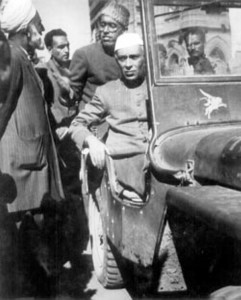
His public statements against students ruffled feathers of some of his student supporters. A group of University Students at the behest of Sofi Muhammad Akbar called on him. Seeing some students on his lawns, he got annoyed and in a fit of rage asked what brought you here, your job is to study. In this group, he knew a couple of students, who were close to the Plebiscite Front President. On this one of the students said that we have come on our own- Sir, in your speeches, you are castigating students, we are your supporters but we have a right to know what the dialogue with New Delhi all about is? At this Sheikh roared and with fire in eyes asked the students to get out. However, the students did not move away. Sheikh returned from the door of his house but this time mellowed down and said in Urdu and Kashmiri. Let me quote him verbatim:
“ Swearing by Allah and Rasool, I am not deceiving nor betraying people. It is just change of strategy, (touching his ear physically) you are not touching your earlobe directly but indirectly. We had brought a tenet, he occupied our house, he has latched doors and windows and does not allow us to enter in to our house- we have no option but to slip into the house from the rooftop- create a pandemonium inside the house to throw away the illegal occupier”.
The objective behind quoting this incident is to say that the whole exercise of the dialogue with New Delhi started on a note of playing false. In the wildest of dreams, I and other fellow students did not believe that our leader was not going to live up to the most sacred pledge he had taken before us. The six-point accord sufficiently revealed it was an absolute surrender but despite that people believed that it would end on a status quo.
For three years, dialogue between Abdullah and Mrs. Gandhi’s emissaries continued uninterrupted and largely political and religious-cum-political organizations maintained an intriguing silence over the developments- except Mirwaiz Muhammad Farooq, in the words of Lamb ‘for one feeling distressed over the happenings’ offered some resistance but could not sustain it’ . 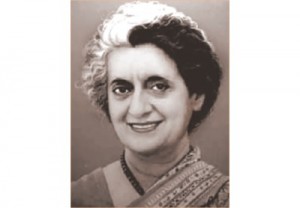
On November 13, 1974 Mr. Parthasarathi and Mr. Beg signed an agreement. There was a belief that the Accord would pave way for undoing the central laws extended to the state after 1953. The rank and file of the Plebiscite Front hardly knew that their leader before endorsing the Parthasarathi-Beg agreement had signed yet another statement that he would not press for the Pre-1953 position. (My Life and Times Mir Qasim Page 138). In this column, I do not intend to analyze the six-point accord that was made public Mrs. Gandhi on February 25, 1975. Many independent scholars like Alastair Lamb have written detailed commentaries on this agreement. However, “this was a political accord between an individual, however eminent, and the government of India,” in the words of A.G. Noorani, “ It bound Sheikh alone and only until 1977.”
This accord like the previous one i.e the Delhi Agreement of July 24, 1952, did not survive even for two years. The Congress Party, withdrew support to Abdullah after nine months. And the agreement by all stretch of imagination was put into the dustbin of history. Sheikh never after talked of the agreement but directly and indirectly whipped up anti-India sentiment. Studies about his 1977 electoral victory indicate that it was an anti-India vote that gave him three fourth majorities.
The much-hyped Delhi Agreement, which delineated relation between Jammu and Kashmir with India in isolation of the UN resolution when seen in right historical perspective, did not live even for three months. The cracks in the agreement started appearing in September only. As very rightly said by Noorani, “Nehru and Abdullah viewed the Agreement differently. To Nehru it was a step towards a close integration of the state with India as well as prelude to finalization of its accession.” Sheikh and Nehru were not on the same page on the question of putting a final stamp to the temporary accession. Sheikh wanted it by agreement between India and Pakistan. Nehru wanted it by exclusion of Pakistan through the State Constituent Assembly. Sheikh was ‘unconstitutionally” terminated and agreement was thrown to the dustbin of history.
The reason for the two agreements between Sheikh Abdullah and New Delhi immediately after signing landing in trashcan is that these were executed unilaterally without involving all the contesting parties. Compared to Delhi agreement and Indira-Sheikh Accord of 1975 the report by the three appointees is not of any consequences and does not even warrant a debate. As I had written on 25 October 2010, in this column that it would be yet another study on Kashmir from a particular position.


Filed under: Editor's Take