Peace Watch » Editor's Take » Intellectuals Cannot be Political Leaders ?
Intellectuals Cannot be Political Leaders ?
Punchline
“Intellectuals” and Leader: Two Need To Work in Tandem
Z. G. Muhammad
Some days back, on a morning walk I had a chance meeting with a schoolmate, now retired college professor- a downtown boy and traditionally a votary of sentiment. Like many others with their conscience not pawned to the power that be, brimming with anguish, he was feeling deeply concerned about the prevailing situation. His face indexed that his heart was bleeding for the killing of ninety-one children and teenagers, blinding of seven hundred of them with lead shots, the wounding of about fifteen thousand children, men and women and detaining ten thousand people in 100 days.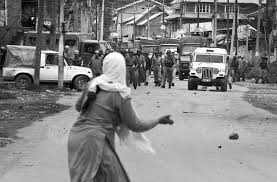
Generating personal catharsis by releasing his anger about the macabre situation that to him seemed irretrievable he complained why “intellectuals” are shy of working in tandem with the leaders for delivering people out of the morass of the political uncertainty. Picking up a trite sentence, he said that ‘our movement suffered during past seventy years because of lack of intellectual input. Historically, our intellectuals failed to rise to the occasion whenever leaders needed suggestions and course correction to steer the movement in the right direction.’
The schoolmate perhaps, for my writing weekly columns and analytic pieces in newspapers or participating in some seminars and conferences mistook me also as an intellectual. He wanted to see people in my tribe to sit on the rudder to direct the movement for carrying out ‘course corrections’ as and when needed. I for one believe columnists and commentators who opine on economic, political and social issues according to their understanding and analysts are primarily critics who try to critically evaluate an economic issue or a political development from their point of view for the general public. I have my doubts if columnists and political analyst by any stretch of the imagination could be called as public intellectuals. Equally, I doubt if they are competent enough to sit on the keel to give direction to political movements. Moreover, I doubt if intellectuals are people with better judgment than leaders to know if a political struggle is off of its trajectory and determine its course vector.
In a world of internet and social media, ‘public intellectuals’ are redefined. Many contemporary scholars see public intellectual as an ‘extinct species.’ But, there are a couple of others like Daniel W. Drezner who in today’s world see public intellectuals as ‘free floating generalists that write on any subject.’ By this definition friend in my fraternity also could be called as ‘public intellectuals.’ This much contested sweeping definition of an intellectual besides columnists and analysts could also apply to bloggers and writers on social media. Nonetheless, this sweeping definition is bound to stumble if people in the tribe of columnists, writers and analysts do not understand that ‘it is their responsibility to speak to powers the truth and expose the lies’ and realize as Edward Said says, ‘an intellectual’s mission in life is to advance human freedom and knowledge. And the role of an intellectual is “to challenge and defeat both an imposed silence and the normalized quiet of unseen power, wherever and whenever possible.” ‘He is someone who visibly represents a standpoint of some kind and articulates the same without barriers. He is neither a pacifier nor a consensus- builder but someone who is staked on a critical sense of being unwilling to accept easy formulas or ready-made clichés or smooth, ever- so -accommodating confirmation of what powerful have to say and do.’
In our society, there are many who far refusing to bow before the mighty, raising voice against injustice and protesting the denial of the fundamental right to the people could be in broader sense rightfully counted as the intellectuals. Coming to the concern of my schoolmate that because of lack of intellectual inputs our struggle has so far got delayed is not justified. In the political struggles intellectual contributions are supplementary and they work as a catalyst for furthering the cause, but fundamentally it is the clarity of mind and indomitable will of the leadership that is paramount for enabling nations to achieve their freedom and political goals. Stanley Wolpert had rightly said about M. A. Jinnah, “Hailed as Quaid-i-Azam of Pakistan and Governor-General Jinnah virtually conjured that country into statehood by the force of his indomitable will.” Same holds true about Ahmed Ben Bella, Fidel Castro, Ho Chi Minh, Nelson Mandela, Gandhi and many others who succeeded in defeating the mighty colonizers and ending apartheid in their country.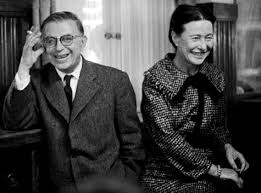
True, histories of freedom struggles of nations like Algeria and Vietnam without a mention about the role played by intellectuals are incomplete. In the mobilizing, the public opinion in France for granting independence to Algeria beside Jean-Paul Charles Aymard Sartre, Simone de Beauvoir, and many other intellectuals were on the forefront. It was because of mobilization of the public opinion in France and internationally by these intellectuals that Charles de Gaulle finally held a referendum in Algeria that led to the freedom of Algeria. Perhaps the conscience French intellectuals conscience would not have been shaken so aggressively but for the role played by lawyer Gisèle Halimi, in highlighting the torture of Djamila Boupacha by French soldiers. It was her zealous campaign against shameful human rights violations that prompted support of prominent artists and writers of France such as Sartre, Simone de Beauvoir, Henri Alleg, André Philip, and Pablo Picasso. So holds true about Vietnam. It was strong words of Jane Fonda; a New York-born film actress broadcast over Radio Hanoi to American Servicemen involved in Vietnam War that worked as a catalyst in the mobilizing intelligentsia and public opinion in America against the war. In her broadcast, she had said, “One thing that I have learned beyond the shadow of a doubt since I have been in this country is that Nixon will never be able to break the spirit of these people; he will never be able to turn Vietnam into a neo-colony of the United States by bombing.” After that, we see American writers and poets camping outside the White House demanding the withdrawal of the army from Vietnam. And ultimately Nixon bows down before the public pressure and withdraws from Vietnam.
Sitting on keel for directing to political movements, in my opinion, is work of leaders. It will be disastrous if intellectuals in Kashmir start thinking to don as leaders for leading the people’s struggle. The job of public intellectuals in Kashmir to my understanding is to tell people in India and rest of the world candidly the whole truth. Instead of self-flogging, which has a negative impact on the struggling people, their job should consolidate the gains of the struggle in mobilizing the public opinion in India and outside. 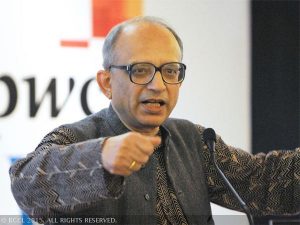 It is a hard reality that 2008- 2010 uprisings had stirred minds of some Indian intellectuals and people like Swaminathan Ayer and Arundhati Roy had moved an extra mile in supporting the people of Kashmir. Equally, these uprising had generated a lot of international public opinion. But, our intellectuals failed to reach out to intelligentsia in New Delhi and the world for consolidating the public opinion and converting it into a movement as powerful as Sartre and de Beauvoir had been able to do.
First Published in Greater Kashmir on 24-10-2016


Filed under: Editor's Take