Peace Watch » Editor's Take » Amdist War Cries- Why Durrani was in New Delhi.
Amdist War Cries- Why Durrani was in New Delhi.
Z.G. Muhammad
India and Pakistan relations are on the rocks. This not a new phenomenon. Since their birth, history of the two nations is plagued with suspicion, trust-deficit, skirmishes and wars. Principal cause for the war of attrition between the two countries has been Kashmir. Throughout, their history international community has nudged them to resolve the dispute and write an essay in harmony.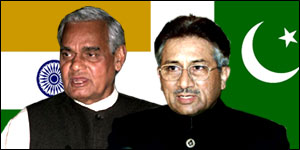
The current phase of strained relations between the two counties have cast thick shadows of darkness on the region. These are on a short fuse that could take any time an ugly turn and bring them on a collision course and lead to one more full-fledged war- more devastating than the previous ones. On February 6, 2015, former US Ambassador to India Robert Blackwell and Professor Stephen Cohen Stephen a senior fellow in the India Project, part of the Foreign Policy Program at the Brookings Institute Washington hinted towards it. Blackwell told the reporters during a conference call organised by the Council on Foreign Relations (CFR), a top American think-tank in Washington that Indian military, had briefed Modi’s predecessors to attack Pakistan if there is a major terrorist attack in India ‘whose breadcrumbs lead to the country.’ But Manmohan Sing and Vajpayee had ‘never found military options against Pakistan attractive.’ He believes if a situation arises ‘Prime Minister Narendra Modi is likely to use the military option against Pakistan.’ Stephen Cohen also believes, if such a situation arises Modi ‘can perhaps even directly attack on Pakistani territory, hitting camps.’ Both Blackwell and Stephen Cohen have strong links in New Delhi.
The statements of the two important influential Americans subtly suggest that a war in the region is just a ‘terrorist act’ away. And detonator for triggering a war in the region is in the hands of the ‘rouge elements’ and ‘non-state actors’ that can play a mischief at any time. Out of the three wars between India and Pakistan, two were fought on Kashmir. All those times both countries were non-nuclear. It was but for the intervention of President Bill Clinton that during limited war in arid mountains of Kargil between the two countries, the region was saved from a nuclear catastrophe. If there is fourth war as presaged by the two Americans, it will be a war between two nuclear-armed countries.
Nonetheless, Pakistan for its military engagements on the Western borders is not in favour of hostility with its immediate neighbour. The increased unofficial visits of some former diplomats and army generals to India is indicative of Islamabad’s keenness to revive a dialogue with New Delhi at the earliest. Former Pakistan NSA General Mahmud Durrani, who had been sacked for his admitting the lone survivor of ‘Mumbai terrorist attack’ Ajmal Kasab was a Pakistani was three days back in Delhi. General Durrani, who was Pakistan’s Ambassador during Musharraf’s period had an excellent rapport with the State Department and White House. 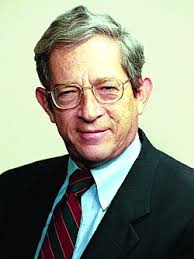 He had meetings with ‘officials and mostly non-officials’ for lobbying for resumption of suspended dialogue between New Delhi and Islamabad. Notwithstanding, his being seen very close to former President General Musharraf, he could not have visited India on his own. In an interview with Suhasini Haidar, Diplomatic editor of Hindu he sounded positive about reopening of dialogue between the two capitals He is believed to have met India’s NSA, Ajit Doval- Modi Man Friday in framing foreign policy. He neither conformed nor refused his meeting with Ajit Doval. But offers a cautionary note in stating that ‘Modi wants to do things, but in his own way.’ ‘So another thing I learnt is’, he said, ‘we shouldn’t try and pick up things from our old talks, and try and push that through, because that might not work.’
The former General succinctly suggests that Modi will not be interested in process initiated by former Prime Ministers Vajpayee and Manmohan Singh and including the much trumpeted General Pervez Musharraf’s four point formula about which we are often told that an agreement on Kashmir had been reached in 2007 but was just signature away. Some important Pakistani commentators and senior diplomats like Shamshad Ahmed and Munir Akram had seen collapsing of the Pervez Musharraf government and along with it end of agreement on Kashmir as a “divine intervention” in favour of Kashmir cause. No details about this agreement have so far been made public by New Delhi or Islamabad. The Pakistan Foreign Office some years back stated there were no papers about any agreement between Manmohan Singh and Pervez Musharraf on Kashmir on the basis of four point formula with them. Towards the close of February 2015, a book ‘Neither a Hawk nor a Dove,’ authored by Khurshid Mahmud Kasuri, former Foreign Minister of Pakistan published by Penguin is expected to hit the stands. The book authored by a key character in the process is expected to provide an insight into the framework for solution for the dispute ironed out and agreed upon by India. Like many other students of contemporary history of Kashmir conflict, I am also waiting for the book with the hope that it may shed some light on the details, so far not in public domain. Notwithstanding, the BJP government so far being caught up in status quoist mind-set and toying with ideas of seventy year old Hindutva agenda for Kashmir, may be after seeing at the unsigned agreement between Manmohan Singh and Musharraf starts realizing that India cannot sit on the big table without resolution of the Kashmir dispute.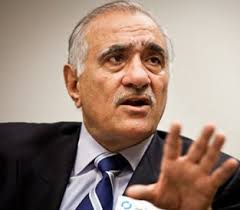
The BJP leadership needs to look at the Kashmir problem cool minded. The best minds in India and globally have been unanimous in attributing the birth of the Kashmir dispute and its perpetuation to the impulsive nature of the first Prime Minister of India, Jawaharlal Nehru. And whenever an opportunity arose for resolving the dispute, Nehru scuttled the move. Even his cabinet minister were tired of his impetuous response towards Kashmir. Dr. John Mathai, his Finance Minister once told a British envoy ‘problem number one for India was Kashmir and not food, because Nehru being unreasonably emotional about this question.’ To see India really becoming a superpower, Modi will have to undo Nehru’s legacy. Here, I am reminded about last lines in Danger in Kashmir’ authored by Josef Korbel, ‘The people of Kashmir have made it unmistakably known that they insist on being heart…..The accession of the state of Jammu and Kashmir to India cannot be considered as valid by cannons of international law. The issue cannot be side-tracked. ‘History of the case has made it clear that time has on aggravated, not healed the conflict; that neither Kashmiris nor Pakistani will accept the status quo as a solution.’ (Published in Greater Kashmir on 9-2-15)


Filed under: Editor's Take