Peace Watch » Editor's Take » Ban Ki Moon Move Beyond Ritualistic Statements.
Ban Ki Moon Move Beyond Ritualistic Statements.
Punchline
Bringing Kashmir to Table.
By
Z.G.Muhammad
‘Atal Bihari Vajpayee is a statesman with an olive branch for Pakistan and a resolution for Kashmir Dispute in mind.’ This line orchestrated by a section of New Delhi print and electronic media on his taking over as Prime Minister of India found some takers even amongst the Kashmir resistance leaders. Their belief got further strengthened after; Vajpayee travelled to Lahore on the inaugural bus run of the Delhi-Lahore bus service. 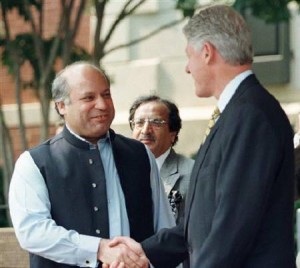 The two-day visit from 20-21 February 1999 to this historic city stirred a lot of enthusiasm in the Nawaz-Sharif led government and also sparked protest on the streets of Lahore against human rights violation in Kashmir. The visit attained symbolic significance after Vajpayee chose to visit the Minar-e- Pakistan, a memorial raised in remembrance of the day 23 March 1940. The visit was seen as a big gesture of friendship. Some Pakistan newspapers had seen it as beginning of a new phase of friendship between Islamabad and New Delhi. Many Pakistani commentators saw the Lahore summit with its three documents a failure. Despite, disapproval of the Lahore Declaration for it ‘providing an alibi to influential powers to abdicate responsibility to promote a just settlement of the Kashmir question’, the Kashmir Dispute made to the table. In fact, it was after suspension of the sterile dialogue on Kashmir in 1994 that Kashmir had once again made to the negotiating table between the two countries. Many attribute Kashmir making it to the negotiating table in 1999 at Lahore to the statesmanship of Prime Minister Atal Bihari Vajpayee – an overstatement.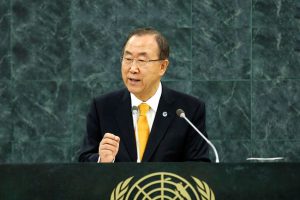
Historically, India and Pakistan have always got engaged on Kashmir because of the resolutions passed by the United Nations Security Council or under an international pressure or nudging by the US. It would be pertinent to mention from that from times of President Harry Truman Washington has been directly and indirectly pursuing the two countries to settle the Kashmir Dispute. There can be no denying that ‘the United States and India have dramatically strengthened their relationship and crafted a serious partnership.’ Notwithstanding, the partnership Washington will find its interest in the region hinged to the resolution of Kashmir. As rightly pointed out by Howard Schaffer in his book ‘The Limits of Influence, America’s Role in Kashmir’, The United States recognizes “the critical part Pakistan plays in the fight against terrorism in Afghanistan and in its own territory also has added to the importance of Kashmir issue and strengthened the case for a more active US role for helping to resolve it.”
Seen in right perspective, Kashmir made it to the negotiating table in Lahore because of the UNSC unanimously passing Resolution No 1172 and not because of the ‘statesmanship’ of Vajpayee. On 11 May 1998, India conducted five nuclear tests in the Rajasthan desert not far away from the Pakistan border. The United States mounted a campaign to persuade Pakistan not to follow the suit. President Clinton made five calls to Nawaz Sharif suggesting him not conduct nuclear tests. Finally, Pakistan followed the suit and conducted six nuclear tests. Imposing sanction on both the countries the UN resolution called upon both the countries to refrain from further nuclear tests and urged them to become parties to the Treaty on the Non-Proliferation of Nuclear Weapons (NPT) and the Comprehensive Nuclear-Test-Ban Treaty (CTBT) without delay and conditions. The resolution also urged “India and Pakistan to resume the dialogue between them on all outstanding issues, particularly on all matters about peace and security, to remove the tensions between them, and encourages them to find mutually acceptable solutions that address the root causes of those tensions, including Kashmir.” Shaffer has recorded this article was added to the resolution by the United States. The adoption of this resolution by the UN Security Council in 1998, twenty-seven years after the much touted Shimla Agreement, in fact, reinforced the earlier Security Council resolutions of 1848, 1949 and 1957 calling for holding of a plebiscite in the entire state as it stood on 14 August 1947. The resolution also recognized the fact Kashmir is the core issue between India and Pakistan that could “spark a nuclear war in the region.”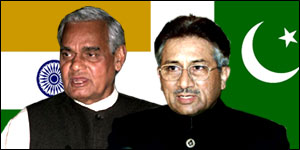
The Kargil War immediately devoured the Lahore Declaration with all its glorification by the two sides and negative implication on the sanctity of the Kashmir Dispute. This war was believed to wreck the dialogue between the two countries over Kashmir forever. In the eyes of New Delhi, Pakistan’s Army Chief General Musharraf was the villain who had waged a war against in rugged mountains of Kargil. How did it happen? Just two years after the Kargil Prime Minister Atal Bihari Vajpayee in his famous article, ‘My musings from Kumarakom – I: Time to resolve problems of the past’ published on New Years Day recognized the historical reality that ‘the Jammu and Kashmir are longstanding problem with Pakistan an inheritance from partition and India was willing and ready to seek a lasting solution to the Kashmir problem.’ He also suggested meeting with Pakistan President General Musharraf on Kashmir. The two leaders met in Agra, despite reaching an agreement described it as a success. In this column, I am not going into details of the Lahore or Agra summit but to look into a fundamental question have New Delhi and Islamabad ever initiated a dialogue on their own. I wrote at the beginning of this article that historically it is either the UN resolutions or US intervention that has made them brought them to the negotiating table. Occasionally, Washington has openly been prodding the two countries to resolve the Kashmir problem. But, mostly it is behind the scene as Bruce Riddle writes about US President Bill Clinton that ‘he was personally very interested in trying his hand in resolving the Kashmir in order to defuse the tension in the sub-continent, he knew a high visibility mediation effort was a non-starter for India and would be refused, leaving him exposed and ineffective.’ It was such a shove from behind the scene by Washington that brought the two countries the two countries on the table even after the nine-month long standoff, with armies of two countries facing each other eyeball to eyeball.
Kashmir is once again on the boil, but New Delhi is in a denial and belligerent mode. To prevent this belligerence breaking into a regular war, it needs a UN resolution or shove from the US for making the two countries and UN Secretary General to sit together for working out a modus operandi for resolving the Kashmir on the principle of the right to self-determination. The UN Secretary General Ban Ki Moon, needs to move beyond the ritualistic statements on Kashmir and live up to the commitments of the Security Council to people of Jammu and Kashmir.
Published in Greater Kashmir on 15-8-16


Filed under: Editor's Take