Peace Watch » Editor's Take » Tahir Muzter’s lament on a blood soaked Kashmir will be remembered for long
Tahir Muzter’s lament on a blood soaked Kashmir will be remembered for long
Z. G. MUHAMMAD
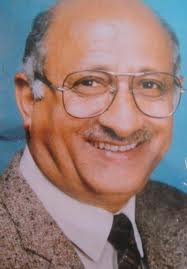 Tahir Muzter is no more. He had a promise to keep. And he kept it. Hundred days after his death his second poetic collection Lahoo Lahoo Kashmir was released. In his journalistic career, he might have had many firsts but journalistic writings being ephemeral, it is difficult to say if posterity remembers him for these writings. Nevertheless, through his ‘Lahoo Lahoo Kashmir’, he has carved a niche for himself in what has now come to be recognized as the “resistance literature”.
It is true; Kashmir is yet to produce as a good a poet as Mahmoud Darwish, who with his defiant verses “started out basically shaping Palestinian nationalism and the Palestine identity in words and consciousness.” Through his poems like ‘Passing Between Passing Words’, he provided national agenda to Palestinians. And, was recognized national poet of the land. ‘He described Palestine as a metaphor–for exile, for the human condition, for the grief of dislocation and dispossession.’ In our case only Aga Shahid could be compared to Mahmoud Darwish, in describing Kashmir as a metaphor for ‘ they make desolation and call it peace’, ‘I am being rowed through paradise on a river of Hell’, and ‘I have been cold long time before’.
Aga Shahid, I do believe in the contemporary Kashmir is the only poet we can call as our national poet. In the just released poetic collection, Lahoo Lahoo Kashmir’, I see the traces of pain and agony of Kashmir that permeate the later work of Aga Shahid. So far as sublimity of Shahid’s poetry is concerned it would be inappropriate to draw comparison between his poetry and that of Tahir Muzter. In the “galaxy” of Urdu and Kashmir poets of land conversant with the craft Tahir Muzter perhaps stands at the periphery. Conscious of his deficiencies as a poet he writes in an introduction to his collection, “I do not dream of becoming a path breaker in introducing a new form of poetry – I am not bothered about structure and form but I believe in communicating my thoughts and ideas directly without any embellishments.” Tahir quotes, Jagan Nath Azad, prominent poet and writer having said about his poetic diction, “That he has artfully blended all the four forms of Urdu poetry and created his distinct form of poetry – I have no name for it at present but credit for invention of this form goes to Tahir Muzter.” And, yet another prominent Urdu writer has called his form of poetry as a, “unique blend of poetry in prose.’
Which genre of literature ‘Lahoo Lahoo- Kashmir’ belongs to, I leave this question to be decided by critics of Urdu literature but knowing Tahir Muzter from his days as editor of the Daily Political Times, a leading Urdu paper during my student days I see this collection of poems as metamorphosis of his political beliefs and outlook. The paradigm shift in the thinking of author/ poet is distinctly visible when his new book is compared to his earlier poetic collection of poems Neelam Ghar written ten years back and released in Jammu.
Tahir Muzter writes about his book, “I had forgotten everything, I found myself standing on crossroads of Kashmir. It was 2010, when I was ‘weaving warp and woof of my book. It was June and July 2010, everything around was soaked in blood. Sobs and wails resonated from all sides. Coffins – chain of them carrying bodies of our blooming youth with their chests pierced with bullets were being carried towards burial grounds— I was feeling that the future of Kashmir is being buried. I questioned myself if the graves in border area of Machal have spoken the truth and it has been proved that innocent young men have been killed in a fake encounter- are we committing a sin by stating this truth.”
The author admits that for ten long years the happenings in Kashmir did not bother him much but he was mostly thinking about a “borderless world”. “2010 shattered me, he writes, “My conscience started questioning me – being a witness to this bloodbath in Kashmir- are you still bothered about borderless world and I responded to my inner conscience and cried:
“Khoon Kashmir kay see’nay say rawan deekh kay bee
Main rahoon sakat u khamoosh yah kay jurm nahi”
(“on Seeing fountains of blood sprinkling out from bosom of kashmir
How can I be inert, is not my a silence a crime”)
This collection of poems spreading over 187 pages containing 43 poems has been dedicated to year 2010, which saw 116 youth and students killed. The first poem titled, “unmarked graves spoke the truth” is about Machal encounter. Second poem is titled as, “It is 2010”. In this poem- or poetic prose the author is deeply moved on seeing coffins after coffins of youth being carried towards the martyrs graveyards:
‘how many names should I count,
schoolchildren,
With bullet riddled bodies,
bathed in blood are going,
Innocent,
without shrouds are being carried’ (to graveyards)
In this collection Tahir Muzter has chosen to reproduce some of poems already published in his earlier collection Neelam Ghar and some poems written before 2008. Many of these poems manifest earlier political beliefs of the author that are different from those that he started professing after 2008 more particularly after 2010. In poems like yah muluk – this country he hails Indian secularism and in yet another poem Gujarat gawah (Gujarat is witness) he feels suffocated in the same country because of religious bigotry and prejudices ruling the roost.
In poem, Machal- aakhar kab tuk (How long to endure Machals) starting from a famous verses of Sahir Ludhianvi :
Zulm Phir Zulm hai, Badtha Hai Tau Mit Jata hai
Khoon phir khoon hai, tapke ga tau jam jaye
The poet is not optimistic about ending of ‘tyranny’ in Kashmir in the immediate past. He believes that there is more ‘hemlock in store for people because their political consciousness is yet to mature- so far they are just crying and lack determination needed for deliverance.’
The book however is an addition to literary landscape of Kashmir.


Filed under: Editor's Take