Peace Watch » Editor's Take » Youth: The Protagonists Of Kashmir Struggle
Youth: The Protagonists Of Kashmir Struggle
PUNCHLINE
OURS IS A YOUTH MOVEMENT
By
Z.G. Muhammad
It is old tactics much tried in the past but failed. Conjuring alternative narratives and churning out one after another ‘hegemonic discourse’ are old Machiavellian strategies for weaving confusions around genuine political struggles for derailing and defeating them. The ‘hegemonic discourse’ do not help in the resolution of the problems but in perpetuating them. Instead of recognizing the harsher realities of the Kashmir Dispute that has bedeviled India-Pakistan relations and caused wars between them, New Delhi has right from in 1948 used all its energies for inventing alternative narratives and ‘dominant discourses.’
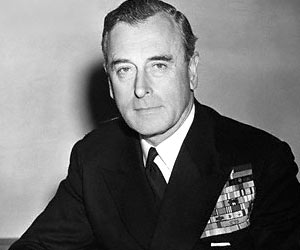 On November 1, 1947, four days after troops airlifted from New Delhi landed at Srinagar airport, the first Governor-General of India Lord Mountbatten traveled to Pakistan for meeting his counterpart M.A. Jinnah. Mountbatten carried with him a proposal from his cabinet for holding a plebiscite in Jammu and Kashmir under the supervision of the United Nations. Jinnah, pleading that it would be long drawn process instead suggested holding a referendum in the state under the control of the two Governor-Generals. Turning down Jinnah’s proposal, New Delhi chose to knock the doors of the United Nations, Security Council. In its complaint besides mentioning that Pakistan was supporting the “invader tribesmen” had also stated that as soon as normal conditions are rest
 ored, the plebiscite will be held under international auspices for deciding future of the State. The complaint produced one after another resolution from the UNSC for holding plebiscite in the state. Nevertheless, once New Delhi found that these resolutions were not in line with its expectation, it started conjuring alternative discourses aimed at disconnecting people of the State from these developments. Mrs. Indira Gandhi, daughter of Prime Minister Nehru, was first to pilot this ‘dominant discourse. In a letter to his father from Srinagar in 1948, she wrote that ‘people in Kashmir are concerned about food grains and selling off their handicrafts goods only. They are not bothered about any political solution.’
This letter in fact provided grist to the ‘hegemonic discourse’ that in the early fifties reached to a high pitch. 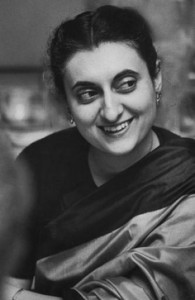 The subsidy on food grains, arranging mega pageants of football and wrestling matches and celebrating the ‘festivals of Kashmir’ with pomposity for promoting tourism were a significant manifestation of this ‘dominant discourse.’ These narratives were used for stifling the people’s voice and pinning down those articulating the popular sentiment.
In the wake of the Holy Relic Movement, the balloon of the Sasta-Chawal (cheap rice) and Jashan-i-Kashmir discourse got fully deflated and replaced by the sweet sounding dominant discourses viz ending of gunda-raj (hoodlum’s rule) and the ‘policy of liberalization.’ In propagating these dominant discourses, the Communists were in the forefront. But, the 1965 student uprising devoured these State Discourses and once again brought popular sentiment to pre-eminence.
In the post-1975 scenario to see the people’s narrative drowned in the cacophony of the hegemonic discourse a vague alternative narrative “Azat-Abroo Ka Muqam” –place of dignity and honor was popularized by the political party in power. Despite the resistance leadership in 1977 almost entirely jumping over the Janta Party the spark of the ‘popular sentiment’ survived in the bosoms of the new generation and off and on found expression in various youth protests- and in a big way in 1989.
The explosion of the pent-up sentiment after 1989, prompted the State to whip up new sets of alternative narratives. For propagating these through various ‘think tanks,’ ‘interlocutors’ and media lots of investments were made. To the long list of the alternative discourses, a new one was added in the during 2016. That the political movement in the state is “rudderless and leaderless” and the young generation on the streets does not recognize the “joint resistance leadership, and this leadership stands “challenged.” It is the “faceless young generation” that is calling the shots, and the Government of India cannot talk to the ‘faceless youth.” During past one year, this discourse has often been repeated by visiting teams or delegations from New Delhi.
Sadly, none of them is aware that through its long history the political struggle in the state has been founded and led by the youth – of course, some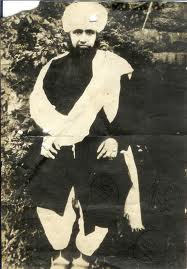
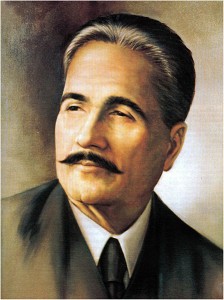 turned gray in their fight for the cause they espoused as young men. In 1896, at the age of 18 Allama Iqbal joined Anjuman-I-Kashmiri Mussalmanan-I- Lahore founded by expatriate Kashmiris in Punjab for articulating the cause of Kashmir. In 1922, Chaudhary Ghulam Abbas a student at the age of 18 founded the Young Men’s Muslim Association and led a successful struggle against the Swami Sharadnand’s Shudhi movement in Jammu. In 1924 at the age of thirty Molvi Mohammad Yusuf Shah led the Khilafat Movement in Kashmir. Sheikh Mohammad Abdullah at the age of twenty-six co-founded the Reading Room Party. In October 1932, on the founding of the Jammu and Kashmir Muslim Conference, Sheikh Mohammad Abdullah at the age of 27 was
 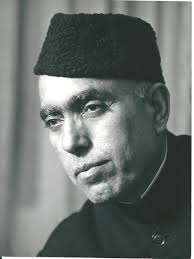 elected its president and Chaudhary Ghulam Abbas at the age of 28 as its General Secretary. Most of the leaders of the Muslim Conference were fresh graduates and post-graduates in their twenties. In the early forties with the birth of Kashmir Student Federation renamed later on as the Jammu and Kashmir Muslim Students Federation student movement struck its roots in the State. Mr. Ahmedullah Rania was elected its President and K. H. Khurshid as its General Secretary. Khurshid, later on, was President of AJK.
So holds true about the contemporary “resistance leadership” of the State. Most of them joined the movement in their youth. In 1949, at the age of 20 Syed Ali Shah Syed Ali Shah Geelani also started his political activism and in 1962, at the age of 33 suffered first long imprisonment. That also holds true about Mohammad Yasin Malik, he shot into prominence as firebrand student activist in his late teens and Mirwaiz Umar Farooq earned the distinction of being the youngest Chairman of then Joint All Parties Hurriyat Conference.
History, of Kashmir Struggle, thus demolishes the new found dominant discourse that joint leadership has become “irrelevant” and new generation is ‘faceless.’
Published in Greater Kashmir on 5-6-17


Filed under: Editor's Take