Peace Watch » Editor's Take » Of Continuous Mourning And Writers Role
Of Continuous Mourning And Writers Role
Punchline
Wounds Won’t Heal
Z. G. Muhammad
‘Forgetting our recent agonizing past and getting embroiled in the “hegemonic state discourses” is our trait. As a nation we have the shortest memory’. Often recounting our predicament, out of disappointment and desperation many of us use this statement for self-flogging.’
That we are a nation with the shortest memory. Is this a terse formulation of truth? This question haunted my mind, when a promising computer engineering student Gowhar Dar 22, with his dream of taking a job in Arab Emirates for supporting his family was killed by men Khaki.
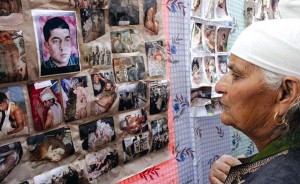
It was not just loss of another youth to the bullets or the tear gas shell but scripting of a whole story of pain and suffering for the family for years to come. The bullets taken out from the martyr’s body, his blood soaked clothes, pictures of his funeral procession and his albums will be the family’s heirlooms for generations to come. These will not be ordinary artifacts but testators that continuously will be reminding the generation next and generation next about their obligations towards the martyr Gowhar. These sacred heirlooms will continuously beckon his parents, siblings and friends to get him justice and see the perpetrators brought to justice.
The aphorism that we are a nation with shortest memory and acquiescent to falling in the trap of hegemonic discourse may have some truth in it. Nevertheless, at individual levels the agitation within us never allows us to forget and harkens us to get justice for our dear ones killed by the ‘trigger happy’. This I was reminded a few weeks back while going up stairs of the Humanities block of Kashmir University for attending a program ‘Meet the Author” in the English Department. A man in his late fifties or early sixties with a sullen face approached me and enquired from me, if I recognized and remembered him. Much before, I would answer his query he continued with his discourse. ‘You columnists and writers blacken reams of papers in analysing statements of politicians, in hailing or criticizing them but never tell stories of thousand of families that have been in continuous mourning for over two decades. The stories of bereavement of over a hundred thousand families is the story of Kashmir. The stories of mourning are the real Kashmir narrative.’ There was some bitterness and anger in his queries and questions. He at certain point of time had been my colleague. Then he was a jolly man full of life, he loved cracking jokes and at every joke made his colleagues to burst into laughers. Today, the crows’ feet and thick dark circles around his eyes and oceans of tears from his eyes having left deep mark of pathway on his face were telling a different story – a story of pain and agony. Like thousands others in our land he also is a personification of the predicament.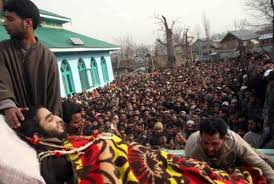
True, I was seeing him after couple of decades. Callously, I did not know story behind his grief and angst. Then he took out a sheet of paper rolled like warrant of appointment for people dispensing justice. There were two names with their age and dates mentioned against their names in black ink. Nonetheless the names scrabbled on the paper were telling loudly years have piled but his wounds were still bleeding. And they will continue to bleed till doomsday. His heart is crying for justice and as years pass by his cries for justice will become shriller and shriller, one day the heavens will answer and ‘out of huts of history’s shame’ truth will reign supreme and the perpetrators will pay for their sins.’
I read and re-read the white sheet of paper, in very few words it summed up the tragedy of a family, the agony of the aging parents that fondly held their slain children close to their hearts. Their tragedy like the tragedy of thousand of parents seemed in sync with a poem of Mahmoud Dervish’; “Your eyes are a thorn in my heart/ inflicting pain, yet I cherish that thorn/ And shield it from the wind/ I sheathe it in my flesh, I sheathe it, protecting it from night and agony/ And its wound lights the lanterns/ Its tomorrow makes my present/Dearer to me than my soul.”
In July 1992, when sun was yet to set, my erstwhile colleague’s two sons one 19, an engineering student and another 13, a class eight student were shot dead inside their home by troopers stationed in the locality. The city was under curfew and men in uniform had ferociously knocked the door of my colleague. No sooner, class eight student opened the door a volley bullets were fired upon him, leaving him in a pool of blood. On hearing, whizzing sound of bullets, the elder brother came out to know what had happened a torrent bullets riddled his body. The FIR lodged under section 302, 307/427 RPC dated 31-7-1992 against the delinquent troopers is yet to get justice. Six years after the gruesome killings the “National Human Rights Commission” asked the State Government to act and see the guilty punished. In June 1999, the State received the note from the “NHRC”. For past sixteen the State has done nothing to bring the errant troopers to justice.
The ageing father of the slain boys has not allowed fatigue to take him over. Instead, he has kept their memory sacred to his heart and has been fighting battle royal against the injustice. His wounds have not healed and they won’t heal. It is the freshness of wounds that re-energize him to fight for justice and not rest till the killers are brought to justice. Every morning, the memories of the children re-energizes him to fight for justice for his children.
This story of my one time colleague is the story of tens of thousands of parents. It is the story of our tiny nation. Then why hegemonic State discourses continue to beguile us. Perhaps the individual memories of the slain are yet to become part of our collective memory and family mourning are to become our collective mourning. Our narrative will become impregnable one our Individual sufferings become our collective sufferings.
Published in Greater Kashmir on 16-11-15


Filed under: Editor's Take