Peace Watch » Editor's Take » Why We Kashmiris Need To Introspect.
Why We Kashmiris Need To Introspect.
Punchline
Why Blame Others
By
Z. G. Muhammad
New nation-states, as history testifies, appeared on the world map just after eight or ten years of struggle. A number of colonized nations after ten or twenty years struggle made the super powers to submit before their will and determination. Sixty seven years after, despite a track record of continuous struggle and enormous sacrifices, why we continue to be caught up in the whirlpool of political uncertainties.
In answering this question that haunts the minds of all and sundry in our land, we take refugee in some stock phrases like, ‘India has betrayed us by reneging its promises’; ‘Jawaharlal Nehru like Mogul Emperor Akbar by deceit snatched our Independence’; ‘Cold war politics and Soviet Veto has perpetuated our sufferings and tension in South Asia etc. True, these phrases are part of our narrative but are not the whole narrative. 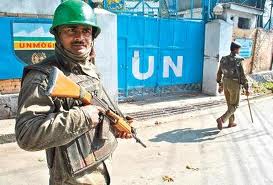
In the process of we remained bogged down in these phrases and have not been able to appreciate the real cause behind our failure in ending the political uncertainty. Instead of defeating political machinations of the collaborators and perpetrators, who have been major players or catalyst in perpetuating the sufferings of teeming millions and making our new generations, one after another as cannon fodders, we have time and again wittingly or unwittingly been yielding space to them. Let us look back and very dispassionately analyse our role as individuals, society and nation, how we have contributed to the birth of our tragedy and perpetuation of our own sufferings and how we continue to do so even today.
From early nineteenth century the colonial rulers of India saw Jammu and Kashmir as defence of British India. They looked at the State as ‘defensive out post’ against any hostile incursions from the north. “Every thing that happened in the State of Jammu and Kashmir between 1846 and 1947 was in some way a part of this strategic policy.” (Lamb) The day it became obvious that British were leaving, the Congress leadership planned annexing of Jammu and Kashmir. On Mountbatten’s taking over as Governor General of India in 1946, Nehru briefed him about geo-strategic importance of Jammu and Kashmir to India and role Sheikh Abdullah was expected to play for safeguarding Indian interests. To translate their plans into reality Nehru in 1946 looked upon Sheikh Abdullah, as the one who could be instrumental in this regard. (Colonel Web May 1946). Explaining to Patel, geo-strategic importance of the State to India, in a letter in September 1947, Nehru wrote to him to ask Hari Singh to release Abdullah as he would be ‘helpful’ in ensuring accession of the State to Union of India. In keeping with conditions for release Sheikh Abdullah out of prison on 27 September 1947, campaigned for accession of the State to India.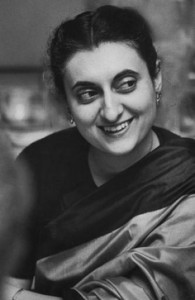
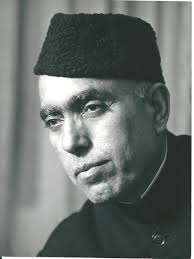
Nehru or Patel, did everything in their national interest. So, why blame them for our sufferings. It would be also wrong to squarely blame Sheikh Abdullah, is it not fact as people we supported all his doings, and refused to listen to the saner voices. Celebrated dismissal of Ramchand Kak and hailed appointment of Major General Thakur Janak Sing as Prime Minister. Greeted Indian troops on their landing at Srinagar. Extended legitimacy to their actions, when on their landing they shot down twenty seven National Conference workers including one Pandit boy Rajander Nath who had gone to greet them. And on the advice of the advice of N.C. leader MD Qara we as people chose not protest against the killings. Had we as people resisted Abdullah’s decisions, story of Kashmir would have been different.
In fifties, when Sheikh Abdullah had realized implication of his wrong decision – thanks to briefing by Ghulam Mohammad Ashai (B. N. Mullick page 10), is it not fact that it were his lieutenants Bakshi and Sadiq, who in 1952 offered their service to New Delhi and conspired against their own leader. Thus substantially emboldened New Delhi to renege commitment of holding a plebiscite in the state. And we as people instead of rising against them as tidal waves to the finish, gave legitimacy to their ‘quislings-roles’ by participating in their public rallies. Is it not fact, none but Abdullah’s supporters for receiving benefits from the government appeared as witness against him in the Kashmir conspiracy case.
Had people en masse boycotted against the illegitimate rule of Bakshi; as a corollary Ghulam Mohammad Sadiq would not have been bold enough to move into his foot steps immediately after the Holy Relic Movement of 1964. The movement that had shaken to roots establishment in New Delhi and taken Nehru out of the denial mode. Had, then resistance leadership shown some political sagacity and not collaborated in the installation of Sadiq for personal ends, he would have never dared to play havoc with the Kashmir identity and violate the Article 370. That stands as testimonial in Indian Constitution about Kashmir being an international dispute, whose future is yet to be decided. Sadiq also started bussing hired crowds to Prime Minister’s rallies in Srinagar and outside for sending message across to the world that all was fine in Kashmir. This trend continues till date, is it not fact that many of us by being part of these rallies are willing partners in perpetuating our sufferings and political uncertainty. Sadiq would not have been able to rule the state from behind the sandbag bunkers for seven years, had the then resistance leaders not collaborated behind the scene. And had people strongly resisted against his fiddling with identity of the state and violating Special Status of the state.
This trend of ‘selling people’s rights for taste of power did not end with his death but continues to be the most prominent feature of Kashmir politics even today. Instead of flagging others, let us introspect and question ourselves; having suffered unprecedentedly during past twenty five years have we as people learnt any lessons.
- More in this Category

Economics of Denial
Any economics that is purposefully oblivious to politics is quite unlikely to result in a meaningful change.
-
India: Hegemony and Consent
-
India’s shrinking vision
-
With Due Respect
-
Legendry Teachers
-
A big success indeed!
0 0 0 0
- Latest News


Filed under: Editor's Take