Peace Watch » Editor's Take » Unpardonable Sins – And Our Tragedy
Unpardonable Sins – And Our Tragedy
PUNCHLINE
Unpardonable Sins
Z.G. Muhammad
Have I committed an unpardonable sin? This has been my predicament for quite some time. Two of my college time bosom friends Abdul Majid and Ghulam Hassan, have not been talking to me for almost forty years. For their deeply entrenched annoyance with me, they did not even invite me to the marriages of their children. In our college days, that were as turbulent as the years of dissent 2008-2010, we exchanged lots of notes and shared our political beliefs—and as young students suffered for our beliefs. Ironically, none of us nursed a political ambition but like all conscientious and conscious youth of those times made humble effort to demolish the ‘dominant discourse’ and strengthen the people’s narratives.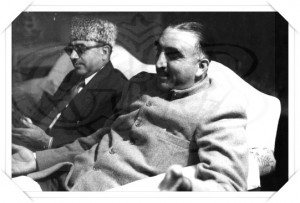
Ostensibly, there was no disagreement amongst us, thus no reason for our estrangement. In the wake of dismemberment of Pakistan in 1971, when winds of despondencies and disappointments swept across the state and political sands started drifting, the Plebiscite Front leadership started a dialogue with New Delhi. In the thick, of the Beg- Parthasarathy confabulations, at the bidding of veteran Plebiscite Front leader, Sofi Muhammad Akbar, a group of students from the Kashmir University called on Sheikh Mohammad Abdullah to know about agenda for the talks. I was one in a dozen. Notwithstanding, his not liking students taking interest in politics, he gave a long explanation for entering into dialogue with India. Taking a vow, he said that ‘he was not betraying the cause but only changing the track to reach to the destination. And in given circumstances there was no other option but to fight them from inside.’
I had no reason to disbelieve vow of the warhorse. And in the emerging scenario in the sub-continent, I also saw initiating of talks with India as pragmatic approach for reaching to the ultimate political goal. Then, I hardly realized as Milan Kundera says it, “too much faith is the worst ally.’ My two friends, saw the whole phenomenon as a deceit to defraud people of their fundamental right. Nonetheless, I continued to believe that detouring will take us to our destination. My friends proved right and I was proved wrong. Rather than helping us to tide over the situation, the detouring in its womb brought more miseries and deaths. So the annoyance of my friends with me was not misplaced. Had, it made a difference. If, I too had dissented from the path taken by the warhorse. Yes, it would have. Like stem cells, I too would have contributed in repairing the system and giving it immunity against malignant cells. Had not my friends perpetuated their annoyance with me, I would not have started introspecting and thinking where I faulted. 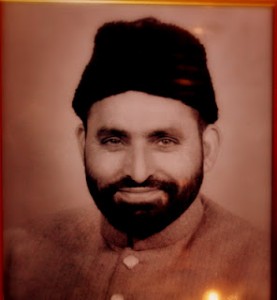
That was at the individual level but at the collective level we have never boldly manifested our anger against our leadership for their indiscreet policies and made them to introspect and think; ‘why even after leading the movement successfully, we have stumbled more than once, much before achieving the goal.’ More than half of our tragedy has its roots, in our leaders. In the thick of the struggle or the movement they have been taking imprudent decisions for achieving myopic objective. It has been our failure to gherao them to introspection and drive them to make necessary corrections in their modus operandi that has emboldened them now to sacrifice bigger objectives for their myopic goals and impulses.
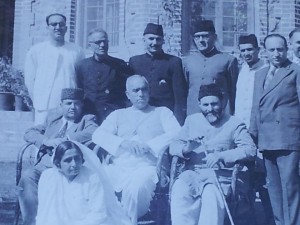
History, is replete with instance when leaders for achieving their short-sighted political objectives caused irreparable damage to the peoples cause. Recapping the role played by the protagonist of the Holy Relic Movement of 1964 Molvi Mohmmad Syed Masoodi and Ghulam Mohi-u-Din Qara is one good the example to illustrate how leadership by pursuing small-time objectives damaged the people’s cause and strengthen the ‘dominant’ forces.
Instead, of pursuing a higher objectives that would influence the GOI to uphold the rights of the people as contained in the UNCIP resolutions of 1948 and 1948, for settling the Kashmir problem on the basis of fair play and justice, they negotiated on the release of Sheikh Abdullah and providing good governance, free from fear and intimidation to the state under a new dispensation. Nursing personal malice against Bakshi in their negotiations with, Lal Bhaudar Shastari, the two leaders leaders demanded removal of Shamas-u-Din, his protégé to be replaced by G. M. Sadiq.
For the caprices of the Action Committee leaders Masoodi and Qara , under cover of so-called good governance and slogan of liberalization the people’s cause under Sadiq rule was not only dented but damaged irreparably. People were denied right to dissent, students were detained in hundreds, and the most damaging role that Sadiq played was in eroding the Special Status of the state- that when seen in right perspective boldly spoke about internationally recognized status Jammu and Kashmir. The debates in Indian Parliament at the introduction of the Article 370 in the Constitution was linked with the disputed status of Jammu and Kashmir. It was temporary provision that could go only after settlement of Jammu and Kashmir Dispute in accordance with the UN resolution.
G. M. Sadiq, who was direct beneficiary of the Holy Movement for short-sighted objective of the Action Committee leader played havoc with the special status of the state. In converting Article 370 into a ‘hollow shell’ almost all historians agree that without offering an iota of resistance the new Chief Minister collaborated with New Delhi. Writing in great detail about Sadiq’s role in playing fraud with autonomy of Jammu and Kashmir, author M.S. Pampori quotes Justice Baha-u-Din Farooqi: ‘Government of India went whole hog in rescinding the special status and make Article 370 redundant. A host of Presidential orders followed which modified the Constitution (application to Jammu and Kashmir) order 1954, as result the state was denuded of remaining legislative powers.’ (Kashmir in Chains pages 428-429).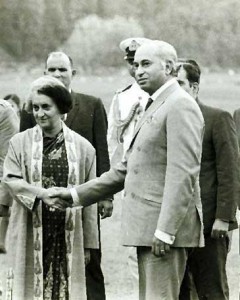
On 10th April 1965, the state legislature enacted the sixth amendment to the constitution, the head of state elected by the state legislature was replaced by governor nominated by centre.’ A.G. Noorani wrote in Greater Kashmir on 30 January 2015, “It was Sadiq who wrecked Kashmir’s autonomy; politically by planting Congress in the State and constitutionally by further eroding an eroded Art. 379. He planned this soon after he became CM.” During seven years Sadiq’s rule basic structure of the State Constitution was altered. It can be said without fear of contradictions, the leaders that facilitated his installation during the 1964 Holy relic movement were not only catalytic in eroding the autonomy of the state but had criminally connived for the same.
This is not the only faux pas of leaders in the ‘vanguard’ of the movement that could be describe as unpardonable sin. Our contemporary history is replete with instances were some organizations and leaders articulating the popular sentiment have been strengthening the dominant discourse by eroding the larger cause under various façades- such as good governance and development…Thus infringing the peoples cause.


Filed under: Editor's Take