Peace Watch » Editor's Take » Kashmir Dispute And Washington – Story of Hope and Despair
Kashmir Dispute And Washington – Story of Hope and Despair
It is history. No American president, no Secretary of State has ever visited Kashmir. Not even former Presidents and Secretaries of State have ever chosen Kashmir as tourist destination. And whenever, any US top official including Ambassadors in India visited Kashmir it made a news- sometimes left behind a trail of controversies that impacted Kashmir politics. But, the Soviet leaders Nikolai A Bulganin and Nikita S Khrushchev at the invitation of India visited Kashmir. The two publicly opposed US stand on and fully supported India’s position on Kashmir.
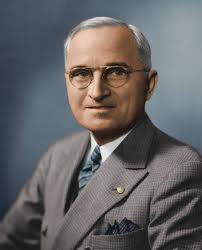
Story of Madeleine Albright is a bit different than all other US Secretaries of State. She was witness to the birth of the Kashmir Dispute. ‘When I was ten, my father had served as chairman of a UN Commission on India and Pakistan charged with resolving the status of Kashmir. Even at that age, I understood the basic facts”, She wrote in her book ‘The Mighty and The Almighty’ published by Harper and Collins in 2006. ‘Indian sub-continent was split on the basis of religion.’ She wrote, “Kashmir was caught between the two; it had a Muslim majority, but a large Hindu minority and a Hindu ruler. The job for diplomats was to find a solution that would leave all sides satisfied. That was almost sixty years ago; now my father is dead and I am old, both countries have nuclear weapons, and the problem is little nearer to being solved.” (P 110-111)
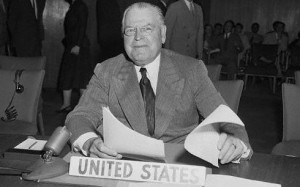 Stating that Madeline Albright was witness to the birth of the dispute is not to suggest that other US presidents and Secretaries of State were not informed about the Kashmir Dispute and did not understand urgency for resolving this dispute for bringing peace in South- Asian- a region that during past decade and a half was more than once on the brink of nuclear war over Kashmir. True, United States is not a direct party to the Kashmir Dispute. Nonetheless, right from 1947, its presence is felt in the Kashmir narrative as intimate as that of India and Pakistan. On October 27, 1947, after landing of Indian troops and ‘conditional and provisional’, “Instrument of Accession” supposed to have been signed by fugitive Maharaja Hari Singh- Jammu and Kashmir emerged as dispute between India and Pakistan. Four days after the Governor Generals of newly born dominions of India and Pakistan met in Lahore to decide about modus operandi for deciding future of the disputed state. The Governor General of Pakistan, M.A. Jinnah wanted it to be resolved bilaterally through a plebiscite under joint control and supervision of two Governor Generals. Jinnah’s three point proposal also included simultaneous withdrawal of tribesmen and Indian troops from the state and vesting powers with two Governor Generals for managing the affairs of the state and creating conditions for holding a plebiscite. Governor General of India, Lord Mountbatten had proposed holding of plebiscite under the supervision the United Nations. Mountbatten’s proposal was articulated by Nehru in his public broadcast on 2 November 1947. Notwithstanding, India not agreeing simultaneous withdrawal and Nehru insisting on retention of Indian troops in the State Pakistan agreed to holding of plebiscite under aegis of UNO. Prime Ministers of two countries exchanged telegrams and letters but could not reconcile on the nitty-gritties for holding of plebiscite and with this direct negotiations between two countries ended.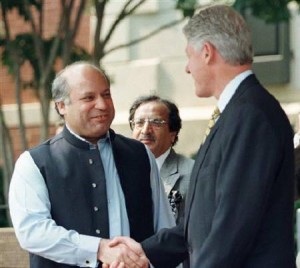
On 31 December, India complained before United Nations Security Council under Article 35 of the UN Charter against Pakistan. And it is after this complaint that the United States entered into Kashmir narrative. The United Nations after hearing India and Pakistan representatives adopted number of resolution. ‘The United States not only played major role in drafting UN resolutions calling for an internationally supervised plebiscite but also co-sponsored the resolution of 21st April 1948 that provided foundation for all subsequent resolutions including January 5, 1949 resolution. Consequent upon passing of this resolution a five member UNCIP was constituted for bringing truce between India and Pakistan and preparing ground for holding plebiscite. The United States was represented in this Commission by Jerome Klahr Huddle. He played an important role in the Commission and kept the State Department posted about the progress made and sought regular advice in this regard. Admiral Chester W Nimtiz, an American was appointed by UN as Plebiscite Administrator. Despite, both the countries agreeing to his appointment, India later on developed second thoughts about it. It was again US as co-sponsor to the UN resolution of 1957, which negated the J&K Constituent Assembly actions and reaffirmed that ‘state’s accession with India was not internationally a binding.’
The US interest in Kashmir proved both advantageous and disadvantageous to the Kashmir Dispute. It proved helpful in as much as making the UN passing resolutions guaranteeing right to self-determination to people of the state. It hurt interest of people of the State for Kashmir becoming a ‘cold war issue’ that ‘ensured a Soviet veto for any Security Council Resolution unacceptable to India.’ Making best use of proximity with the Communist bloc, Nehru by playing upon Pakistan entering into military alliance with America succeeded in deferring a resolution and maintaining status quo. But, for the Soviet veto and Nehru’s blowing hot and blow cold “Kashmir imbroglio” would have been settled in mid-fifties. 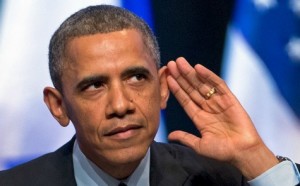
The Soviet vetoes did not dampen US initiative. Besides continuing its multilateral diplomacy it made efforts for seeing resolution of the Kashmir Problem outside UN either alone or with Britain. From President Harry Truman to President Bush, all US presidents have recognized resolution of the Kashmir dispute as vital for peace in South-Asian region. Kashmir in fact has been an important key to Washington South Asia policy. For a long time Kashmir was one of important defining factor for India-US relations. It has been only during the term of President Obama that Kashmir has not been of much a concern to the White House. In 2008, during his campaign he had clarity on Kashmir and had seen the resolution of this dispute as gateway to peace. His statements during campaign had brightened hopes that he will fully commit himself for resolution of the dispute in the larger interests of global peace. But after taking over as President this dispute did not receive expected attention from White House. Considered view of many an American experts is ‘A Kashmir settlement has become even more important for American interests in South Asia than before’. As rightly pointed out by former US diplomat Howard Shaffer, “Obama’s Administration should follow up the interest in a more robust US role in Kashmir he expressed on campaign trail and seek out opportunities to play it.”


Filed under: Editor's Take