Peace Watch » Editor's Take » Obama’s India visit and Kashmir connection
Obama’s India visit and Kashmir connection
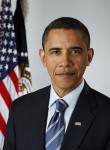
Barack Obama
Nov. 6 is going to be the D-day for New Delhi.
That is the impression one gets about the visit of US President Barack Obama to India on that day. He is arriving in the country’s commercial capital, Mumbai when majority of Indians would be celebrating Diwali — the festival of lights and most of North India would be drowned in a sea of lights. The night is marked by lighting of fireworks and exploding of firecrackers worth millions of rupees every year. A word has been very subtly sent across by the government, “save some of those firecrackers if you are a fan of Obama and/or a votary of better India-US ties” to greet the US president.
What makes New Delhi so excited is the question that haunts the public mind. Is the thrill over the expectations of the summit helping in deepening America’s commercial relations with this country, strengthening US-India nuclear partnership and supporting American jobs – a vital question that has been under debate for the past many weeks or something beyond. Many New Delhi-based journalists and television anchors have been deriving pleasure out of Islamabad not being part of his 12-day tour. Besides India he will be visiting Indonesia, Japan and South Korea. It is believed that this visit has been promoted more because of “China’s assertive stance” and not because of the situation in Afghanistan and Pakistan. Many Indian writers have been attributing noninclusion of Pakistan in Obama’s itinerary to Islamabad’s stronger ties with Beijing. Besides thrill, fears are also lurking in the minds of New Delhi. The fears are about Kashmir dispute finding primacy in the agenda.
Indian Foreign Minister S.M. Krishna after his visit to Washington shared the US perception about Kashmir with some senior editors of New Delhi newspapers. He said Washington has its own compulsions in Afghanistan and that is where it needs Pakistan much more than before. And US wants us to resolve Kashmir bilaterally with Pakistan. Indian diplomatic corps in Washington have been working overnight to ensure Kashmir does not dominate the visit. The worry got doubled because the worsening situation in Kashmir during past four months got large coverage in the US and European media and invoked statements of concern from some US Congressmen like Don Burton and Dennis Kucinich.
It is a big question if the Indian team of ministers and diplomats that camped in Washington for weeks have succeeded in getting K-dispute deleted from the agenda or not but belief continues to be with many in Srinagar and New Delhi that the 60-year-old dispute that has caused three wars between India and Pakistan, continues to be a nuclear flashpoint in the region and counted by many American think tanks as one of the contributing factors for terrorism will be on the agenda of US president’s talks in India. These hopes were strengthened when two junior diplomats from American Embassy visited Srinagar for four days immediately after The Times of India carried a lead story: “Obama’s pitch: Fix Kashmir for UN Security Council seat.” Quoting top White House sources, the report had said that President Obama during his November visit to India will tell Indian leadership to “go for Kashmir solution and help bring stability to the region and the United States will support India’s candidature to the UN Security Council”. The team met chairman of moderate Hurriyat Conference Mirwaiz Umar Farooq and pro-independence JKLF Chairman Yasin Malik. The team did not meet octogenarian Syed Ali Shah Geelani who has been spearheading the four-month- old peaceful “Quit India” movement. Despite the team’s selective meetings in Srinagar along with reports about Kashmir being on the agenda of the US president created an upbeat mood in beleaguered Kashmir. Kashmiris since the birth of the dispute have been looking to the US as an ardent supporter for the right to self-determination. Soviet Union during Cold War days used to veto every resolution tabled in UN Security Council for the resolution of this dispute. This is the reason for Kashmir continuing to have faith in Washington.
It is not on the spur of the moment that Obama entered into the Kashmir narrative but India has been wary of his presence ever since he mentioned Kashmir during his campaign. Many Kashmir “experts” including a former Indian Army general asked New Delhi to do something about Kashmir before the visit of the US president. It suggests that he is apprehensive of Kashmir becoming one of the dominant subjects for discussion during the visit. The fact is Washington has always been interested in the Kashmir dispute. It was the US that cosponsored the 1948 UN resolution guaranteeing right to self-determination to the people of Jammu and Kashmir. Notwithstanding my disagreement with Howard Schaffer for his formula for the resolution of Kashmir dispute, his book “Limits of Influence” gives a kaleidoscopic view of US involvement in the Kashmir dispute. His book along with others by people like Reobert Wirsing and Shirin Tahir Kheli suggest that despite New Delhi parroting the mantra of “bilateralism,” Washington has been present in all talks between India and Pakistan for the resolution of the Kashmir dispute as a mediator. US involvement was there not only between 1950 and 1971 when Kashmir dominated discussions at the Security Council but even after 1971, when India and Pakistan under Shimla agreement decided to resolve the issue bilaterally. It is a fact that in the wake of the withdrawal of Soviet Union from Afghanistan, Washington’s priorities in the region also changed and it wanted to “enhance relations with India.” In keeping with its changed priorities in South Asia it no more wanted to intervene in Kashmir and was unwilling to insert itself in the squabbles of the subcontinent but was determined to halt the spread of nuclear weapons.
The United States is largely convinced that American national interests would be best served by a policy aimed at diminishing these historic tensions – of course Kashmir being the one. This in fact is what Obama, one of the brightest minds in the United States had learned from history. During his election campaign he had seen resolution of Kashmir dispute as gateway to peace in one of the most volatile and dangerous regions of the world.
Obama’s campaign speeches about Palestine and Kashmir placed him in the company of the great founding fathers- like George Washington, Thomas Jefferson, James Madison and Benjamin Franklin.
True, the Kashmir leadership more particularly those demanding right to self-determination for the people of the state as enshrined in the United Nations Charter are yet to respond to the visit. However, the statement made by a former Minister of State for External Affairs and present Chief Minister Omar Abdullah on the floor of the state assembly has highlighted the importance of resolving the issue for peace in the subcontinent. His statement may be seen disagreeing with the statement made Indian Foreign Minister Krishna in the Security Council but it is largely in sync with the dominant thinking in Washington that was has been amply manifest in the statements of Obama or his predecessors that the dispute should be resolved in accordance with aspirations of the people. Despite New Delhi’s intense lobbying having prevailed upon White House in not appointing an envoy for Kashmir as was done in the case of Afghanistan the United States understanding of the peace in the region has not changed. It continues to believe that the resolution of Kashmir dispute holds key to lasting peace and restricting China’s influence in the region. Washington very well understands that playing cool on Kashmir would be encouraging a greater role for Beijing in the region — the Maoists in India nicknamed as “India’s Red Army” unlike most of political parties in India not only have been supporting Kashmir’s right to self-determination but had also identified themselves with the people of Jammu and Kashmir by calling a strike in six Indian states in support of Kashmir struggle and against caging more than half a million people for months by imposing curfew and killing of 110 children and youth.
India undoubtedly is America’s strategic partner in the region but it also needs to remember this partnership will be meaningless as long as the region continues to rest on a volcano of uncertainty- with Afghanistan in the grip of violence and Kashmir in turmoil.
— Zahid. G. Muhmmad is editor, Peace Watch, Srinagar.
(www.peacewatchkashmir.com
—
ZAHID G .MUHAMMAD
Columnist and Writer
Srinagar,
Kashmir.


Filed under: Editor's Take